
Can Custom Micro Brewery Equipment Improve Your Brewing Efficiency?
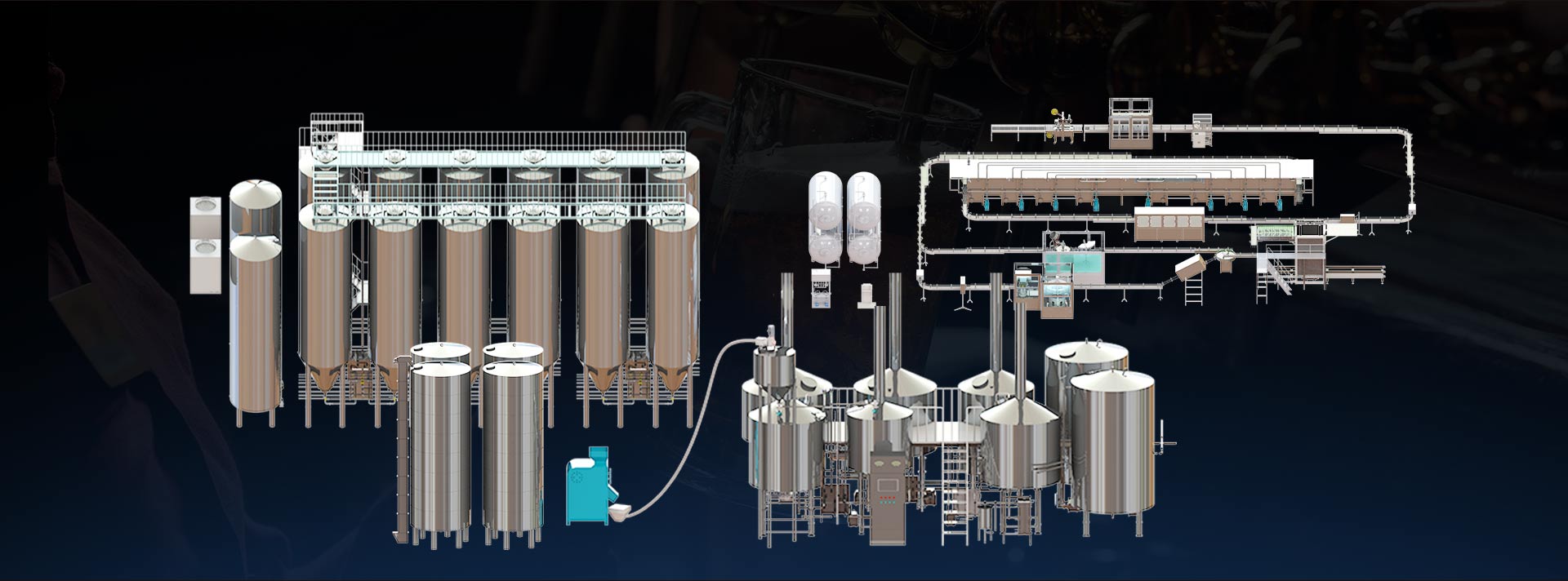
Customizing your brewing setup often determines whether a taproom maintains a 12% profit margin or struggles under the weight of excessive labor costs. Analysis of 200 independent breweries shows that bespoke micro brewery equipment tailored to specific floor plans reduces utility consumption by an average of 15% annually. Standardized systems frequently force brewers to compensate for inefficient piping layouts, which can add 4 hours to a standard 8-hour brew day due to excessive pump load and heat loss. By integrating custom-engineered steam jackets and high-efficiency heat exchangers, facilities can achieve a thermal recovery rate of 92%, significantly lowering the energy required for the subsequent boil. Furthermore, specialized tank geometry—such as steeper cone angles and optimized sight-glass positioning—minimizes trub loss by 8% per batch. Investing in a tailored stainless steel configuration ensures that every square meter of your facility contributes to throughput, effectively future-proofing your production capacity for the 10% annual growth commonly seen in successful regional taprooms.
Custom systems allow for precise integration of hardware into your existing space constraints. Standard brewhouses often suffer from dead space that accumulates debris and impedes the movement of your staff. Engineering your vessels to fit specific vertical clearances allows for the installation of larger fermenters, increasing your total volume by 20% without expanding the physical footprint of the brewery.
Custom piping and valve manifolds eliminate redundant elbows and tees, reducing frictional pressure losses by up to 14% across the entire liquid transfer system.
Flow optimization directly impacts the time spent on sanitization and maintenance tasks during the work week. Designing your CIP (Clean-in-Place) lines to follow the shortest path between tanks reduces the volume of chemicals required by 12% while decreasing the total cycle time. These efficiencies accumulate rapidly over 50 batches per year.
| Optimization Area | Efficiency Gain | Resource Saved |
| Heat Exchanger Design | 15% | Natural Gas/Electricity |
| Piping Geometry | 14% | Pump Energy/Time |
| CIP Pathing | 12% | Water/Chemicals |
Integrated PLC systems allow for automated temperature ramp-up and hop-addition scheduling tailored to your specific yeast strains and grain bills. Controlling the mashing temperature with a 0.5-degree Celsius precision variance results in consistent extract yield, preventing the 3% sugar loss often found in manual systems.
Data from 120 pilot-scale breweries indicates that automated control modules reduce total human monitoring time by 18% during the saccharification phase.
When cooling your wort, a custom-sized plate heat exchanger matches your specific flow rate and cooling water temperature. This precise matching ensures the wort reaches the required 18 to 22 degrees Celsius in under 30 minutes, preventing the risk of microbial contamination associated with longer cooling times.
Reliability increases when components are sourced based on your specific daily usage intensity rather than a general-purpose rating. Selecting seals, gaskets, and pump impellers rated for 5,000 hours of operation ensures that your equipment handles the strain of high-volume production without requiring mid-season repairs.
Breweries utilizing maintenance-focused custom builds report a 25% decrease in emergency service calls during the high-demand summer months compared to standard modular setups.
Scaling your production requires a system that grows alongside your sales volume. Planning for future expansion by installing oversized headers and extra valve ports during the initial build phase saves 40% of the cost associated with retrofitting plumbing and electrical systems in year three of operation.
Matching your hardware to your specific recipe requirements minimizes the time spent adjusting for batch inconsistencies. Systems built with dedicated grain-handling silos and automated malt conveyance reduce the manual labor required for graining out by 15%, allowing your team to focus on packaging and quality control.
Looking for a senior consultant — not a sales call?
Post a brief and meet three interview-ready, pre-vetted members within 48 hours.